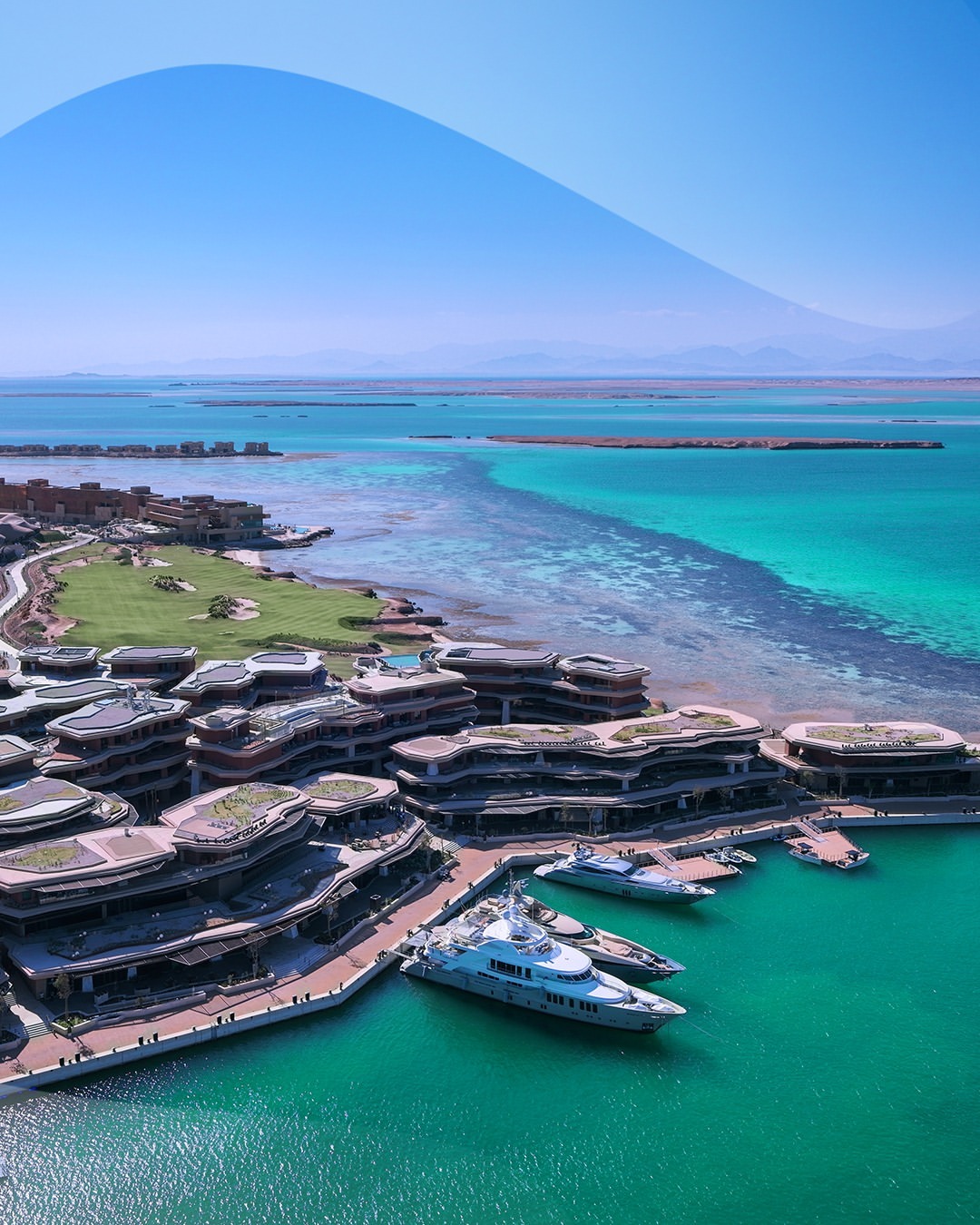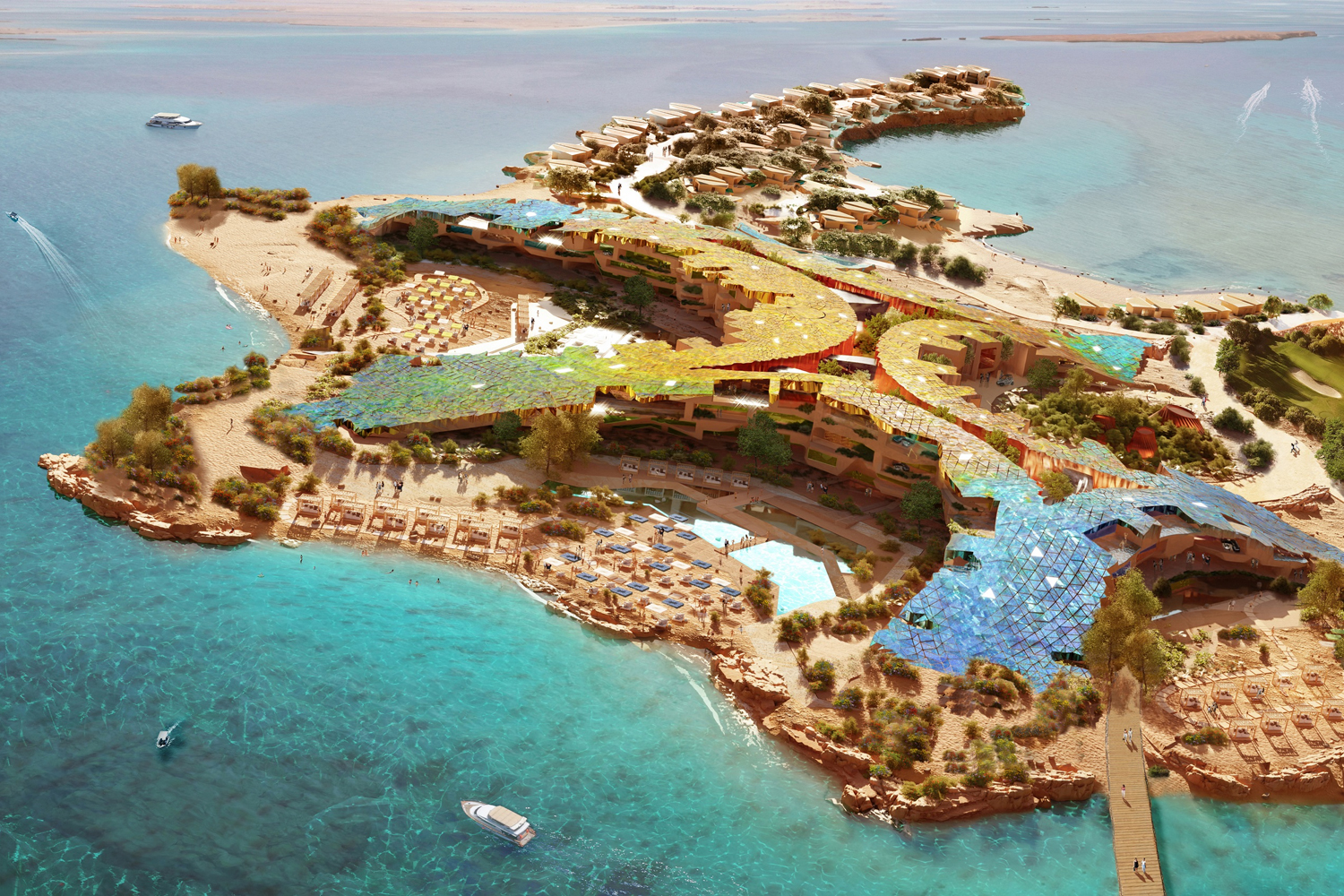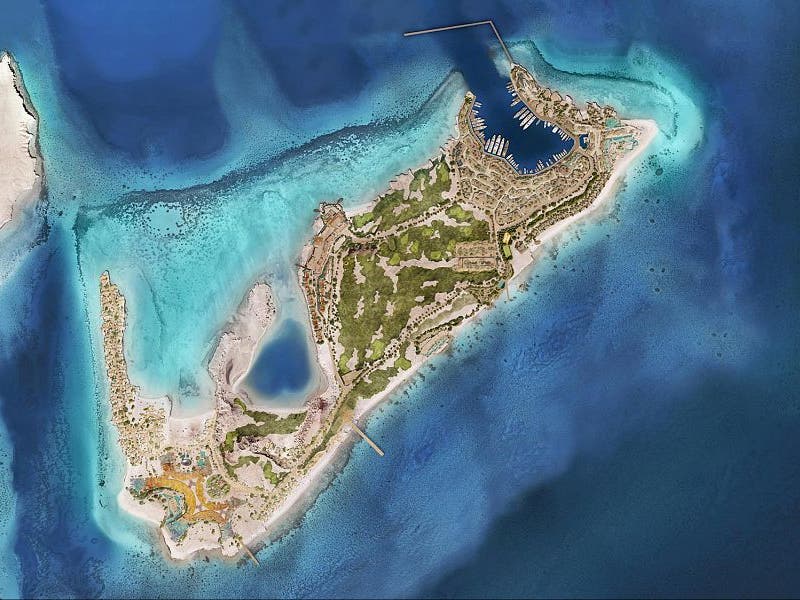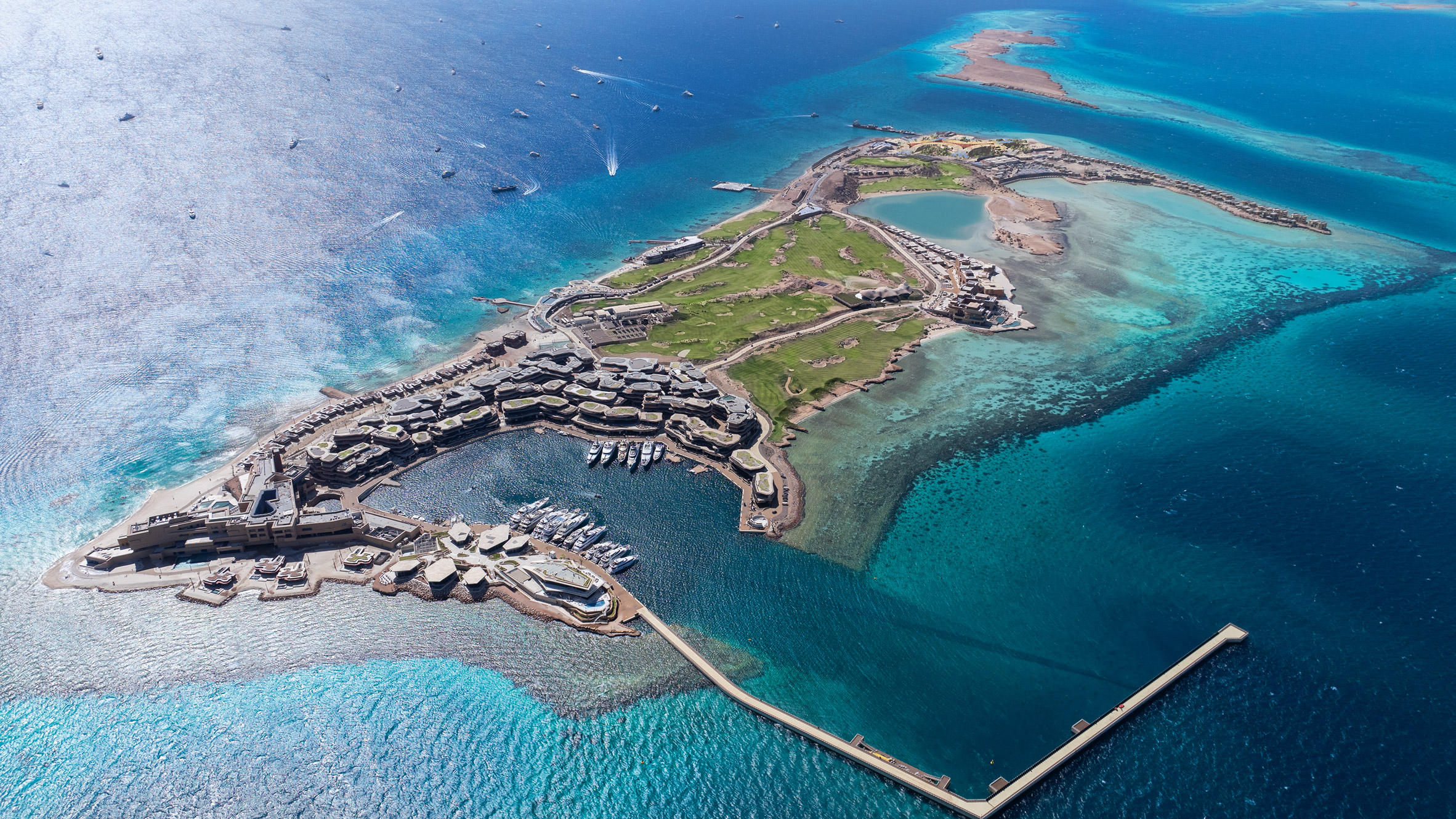

Sindalah Island, located in the Red Sea, serves as NEOM’s premier luxury gateway destination under Saudi Arabia’s Vision 2030 initiative. Spanning 840,000 square meters, the island blends high-end hospitality with sustainable design.
Architectural Philosophy
Low-Impact Footprint: Structures are designed with low-profile elevations to blend seamlessly into the coastal skyline without imposing on the natural ecosystem.
Nautical Design Inspiration: Lead architecture firm Luca Dini Design & Architecture-traditionally known for superyacht design-drew heavy inspiration from marine elegance, giving structures fluid, aerodynamic contours.
Materiality and Bioclimatic Design: The layout uses a trilithic structural system (post-and-lintel) to optimize passive cooling, wind flow, and natural lighting. Facades incorporate natural local stone, iridescent elements, chromoactive materials, and translucent accents that mirror the Red Sea’s waters and coral colors.
Luxury Offerings & Key Amenities
Leisure Infrastructure: Includes a 9-hole beachfront golf course with two distinct 9-hole experiences and advanced marine sports hubs targeting coral reef eco-tourism.
World-Class Marina: An 86-berth marina designed to accommodate mega-yachts up to 50 meters, alongside 75 offshore buoys for larger vessels.
Ultra-Luxury Hospitality: Features 440 rooms, 88 private villas, and over 200 serviced apartments across high-end international hotel brands.
Dining & Retail: Houses 38 high-end culinary concepts, a beach club, and 51 luxury retail boutiques.
Construction & Sustainable Infrastructure
Modular Engineering: Heavy usage of prefabricated, high-precision modular components transported via sea to minimize on-site environmental pollution and footprint.
Environmental Preservation: Built around a rich marine habitat hosting over 1,100 fish species and 300 coral species, construction strictly avoided heavy dredging near critical reef zones.
Advanced Utilities: Fully off-grid capability relying on high-density polyethylene (HDPE) and PVC smart piping networks for zero-waste water reclamation, storm runoff management, and underground micro-ducting for fiber-optics and power.